

Pursuing Greatness, Overconfidence and Timothée Chalamet’s Quest for an Oscar
Timothée Chalamet has made it cool again to be vocal about ambitions and to go after them. Next month, he will bid to win his first Oscar and become the youngest best actor winner in over 20 years.
Following a less than conventional approach, and a Lime bike parking fine, while promoting “A Complete Unknown” last year, Timothée Chalamet embarked on the awards circuit. During which he ended up missing out on gold to Adrian Brody on several occasions, including at the Golden Globes and the BAFTA Awards. However, just a week before Oscars night, the awards race was energised when Chalamet received a surprise win at the SAG Awards, but it was his headline-making speech that really shook things up.
“The truth is I’m really in pursuit of greatness.”
After thanking his mother first and foremost, Chalamet went on to say, “I can’t downplay the significance of this award because it means the most to me, and I know we’re in a subjective business, but the truth is I’m really in pursuit of greatness. I know people don’t usually talk like that, but I want to be one of the greats. I’m inspired by the greats. I’m inspired by the greats here tonight. I’m as inspired by Daniel Day-Lewis, Marlon Brando, and Viola Davis as I am by Michael Jordan, Michael Phelps, and I want to be up there. So I’m deeply grateful. This doesn’t signify that, but it’s a little more fuel. It’s a little more ammo to keep going. Thank you so much.” Unsurprisingly, opinion was divided instantly with strong feelings on both sides. It simply wasn’t something we were used to seeing. The almost guaranteed acceptance speech script had not just been changed but ripped up.
Chalamet’s references to sporting legends were indicative of the nature of the speech itself; it felt like something that would usually be heard at a post-game press conference. We know he’s a sports fan, he hasn’t been supporting the Knicks so animatedly for nothing, and it’s clear the influence sporting culture has had on him. However, there are some key differences that opened Chalamet up to criticism. In sport, it is (mostly) all about winning, and the difference between winning and losing is black and white. That’s not the same in the arts. Awards season is a chance to celebrate great work, but ultimately there are winners and losers. However, the main distinction is that art is subjective; there are no black and white answers as to who was better. Simply winning does not define greatness within film and there are countless examples of actors who are considered greats that have never won an Oscar. Not to mention the working actors who will never be fortunate enough to even be in the room. So if greatness is Chalamet’s primary desire, some of the criticism and cries of arrogance sent his way become valid, but I don’t think that it is.
For many, including myself, the speech was refreshingly sincere and a welcome break from some of the fake humility we are accustomed to. Acknowledging the award as a motivator rather than an apex and illustrating his desire to work hard in order to be mentioned alongside those big names are arguably examples of the humbleness people claimed was lacking. However, it was the sense of passion and motivation that was infectious, and those two factors led to the speech leaving a particularly inspirational feeling. He didn’t claim Oscar gold in the end, but what became clear was that this wasn’t just an isolated moment but a sign of things to come from Timothée Chalamet.
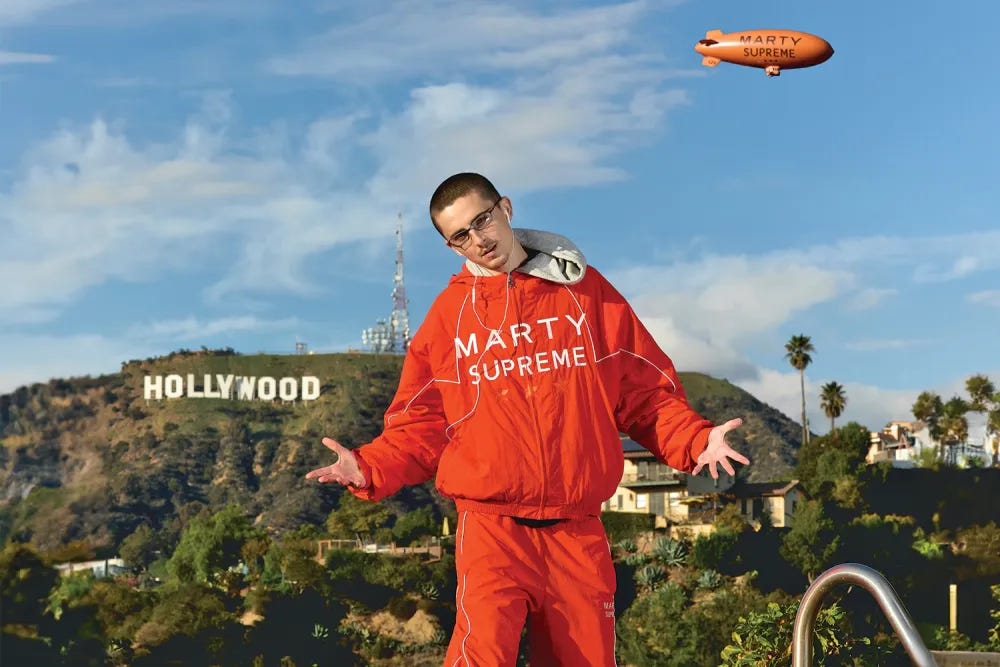
Half a year later, having spent the summer making a small film in the desert with Denis Villeneuve, he was back on the promotional trail. Debuting a new buzz-cut look while being surrounded by orange ping pong balls, it didn’t happen subtly. Having tested several guerrilla-style marketing tactics and stunts while promoting A Complete Unknown, Chalamet refined that same approach and took things to a completely new level in the run-up to the release of Marty Supreme. He became the face and spearhead of a campaign which embodied the spirit of the film itself. The campaign produced one of the most in-demand fashion items of the year while also featuring a rap music video. On paper it wouldn’t have made much sense, but it worked, and created a feeling around the film that ultimately led to it becoming a huge event, particularly amongst younger audiences.
Timothée plays Marty Mauser in the film, who is not someone to be idolised. However, using that character’s energy as a vehicle to promote the idea of going after the things you want to achieve, while feeling unashamed of being seen to try really worked. Having spoken about becoming more well-rounded as an artist, treating the promo with the same importance as the performance itself, it does feel like the Marty Supreme era gained Timothée Chalamet a new level of support. In fact, much of the film’s audience was made up of casual or even non-moviegoers.
Just as many looked unfavourably upon his SAG speech, it’s clear that again this approach has not been for everyone. On a couple of occasions he has given fuel to those critics, particularly when he spoke about his belief of the quality of his recent performances. There was some debate as to whether that was a character moment, but either way it crossed the line into overconfidence. Perhaps something that was inevitable given that at times he was operating so close to that line.
However, there is no doubt that with every appearance promoting Marty it genuinely felt like he was putting his all into it, and not only is that authenticity again refreshing, it continues to feel like something people are really connecting to. In a world that doesn’t always feel like it’s built for younger people to succeed, there’s definitely a frustration, but equally a desire to make something for ourselves and to reach for our aspirations. I think it’s that same feeling being echoed by Chalamet that is really generating a response, and him going and doing it just elevates that further.
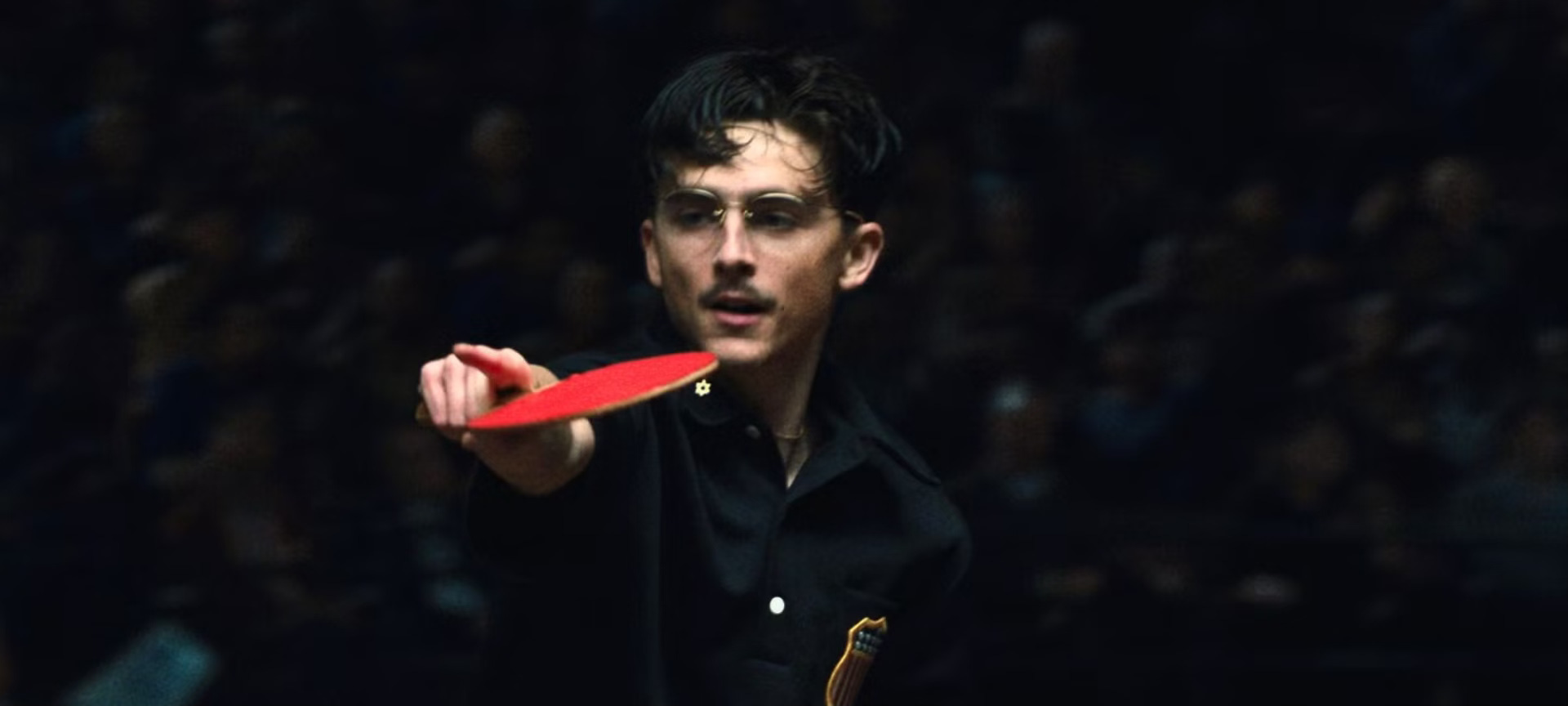
I think it’s undeniable the experience of filming A Complete Unknown and Marty Supreme back to back had an impact on him; he’s said as much himself. I also don’t think it’s a coincidence the SAG speech happened shortly after Marty had wrapped, given that film and character particularly are somewhat reflective of his own career and desires.
Hollywood is often a million miles away, and Timothée Chalamet himself is extremely fortunate to be in the position he’s in, but he shows an attitude that suggests he is aware of that and choosing to make the most of the opportunities he has been afforded. He certainly doesn’t play it safe. During a recent Q&A, Ben Affleck said of Chalamet, “I don’t think there’s any need to apologise for trying to do something great. Nobody ever did anything great just accidentally.”
Some will no doubt misinterpret all this as Chalamet being a new face for toxic hustle culture, but he isn’t that. This is a theatre kid after all. He has simply become a face for trying, for showing up and unashamedly giving things your all.
Timothée Chalamet is nominated for Actor in a Leading Role alongside Wagner Moura, Michael B. Jordan, Ethan Hawke and Leonardo DiCaprio at the 98th Academy Awards, which take place on the 15th March 2026.